

Nemo & Anna
Create IoT devices that don’t exist yet — no firmware, with built-in safety.
What is Nemo & Anna?
The most AI-friendly IoT device. Every action carries its identity — what it is, when it runs, and what must never happen. No guessing. No inference. AI reads it directly. Every device that has ever existed was built for humans to operate. What comes next are devices built for AI to understand. Nemo & Anna is where that starts.
- Every IoT platform starts the same way: pick a device type, then fit your idea into it.
- New ideas get forced into old templates. If your idea is truly new, it cannot be built.
- Ideas stay in slides. A working device means a firmware developer and months of waiting.
- AI now controls devices. But no device asks whether it's safe to run before it does.
- No device type. Name an action — what must happen, when, and what must never happen.
- Any idea can be built. If you can name the action, Anna JSON can express it.
- Nine questions. One working Matter device. No firmware, no reflashing — update the JSON.
- Safety conditions are defined before execution. Not added later — from the start.
Key Features
Not a single line of code
Behavior defined per action — not per device type
JSON updates — device updates — no reflashing ever
Safety declared in the definition — not in the code
Integrations

Solvera
make promotion simple.
Reviews
Sign in to leave a review.
It actually works.
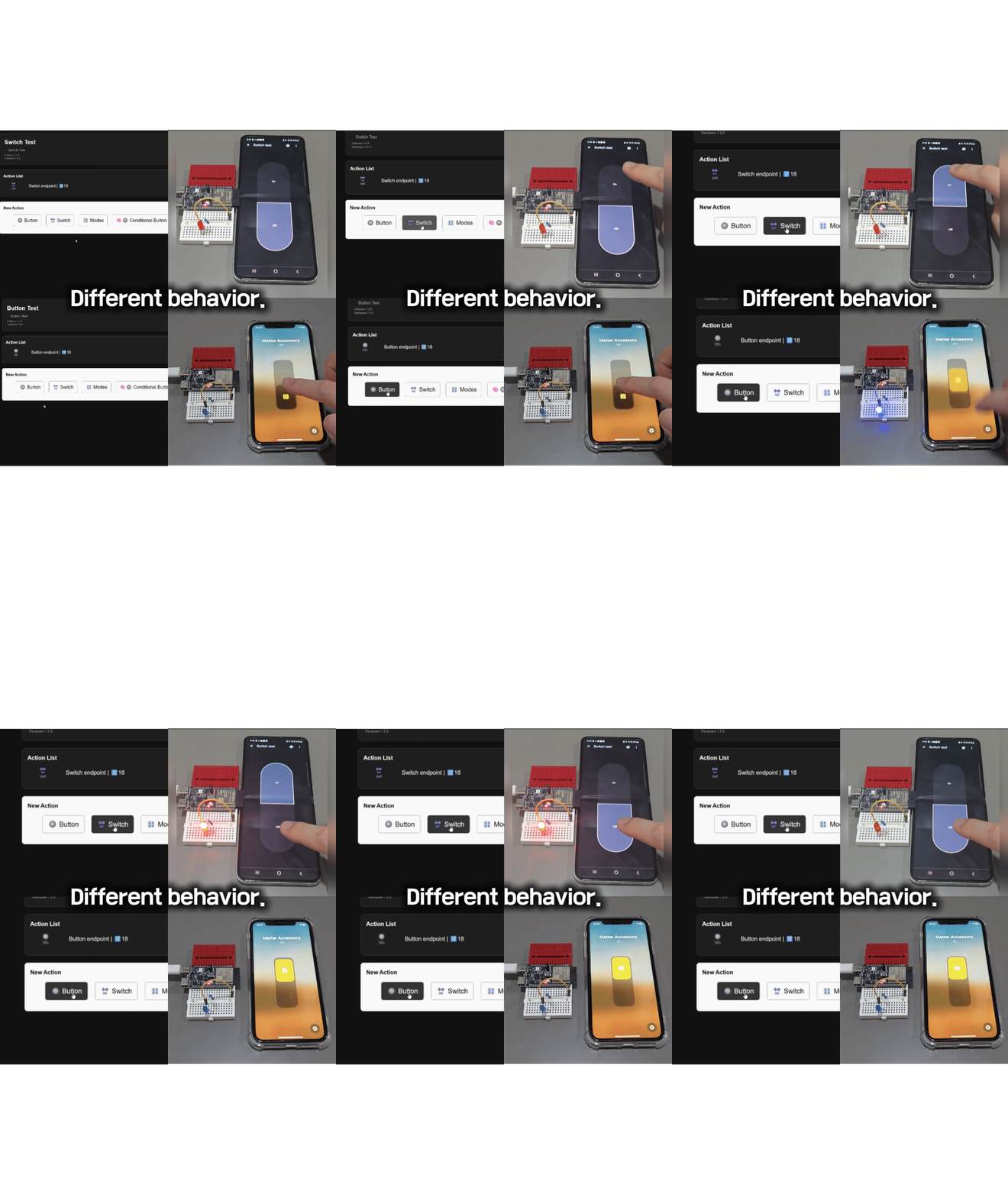
I built an ESP32-C6-based Matter device using 9 questions. When I answered the questions, the actual LEDs operated as buttons and switches. I connected to Google, and it could be controlled immediately via my phone. I fumbled a bit, but I managed to
I didn't believe it because many places claim to be "no-code," but I really didn't have to write a single line of code. You just need to click a few times and enter a name.
The name I entered doesn't appear on my smartphone; it just shows up as "Switch." The user manual states this, but it is actually a bit inconvenient. It says "The most AI-friendly IoT device," but I don't know what that means.
Thanks for the honest feedback. Today many Matter apps still show generic types like “Switch.” Nemo & Anna adds action identity for AI behind that UI. We’re also proposing improvements to Matter/platforms so this can be shown more clearly.
Questions & Answers
Have a question?
No questions yet. Be the first to ask!
Meet the Team
Jang-woo Wi
I’m building Nemo & Anna, a platform that helps people create IoT devices that don’t exist yet. While working with IoT systems, I kept seeing the same limitation: everything had to fit predefined device types, which made it hard to build something truly new. Instead of starting with device types, I focused on behavior — what should happen, when it should happen, and what must never happen. This led to a system where ideas can be turned into working devices without firmware development, with s